
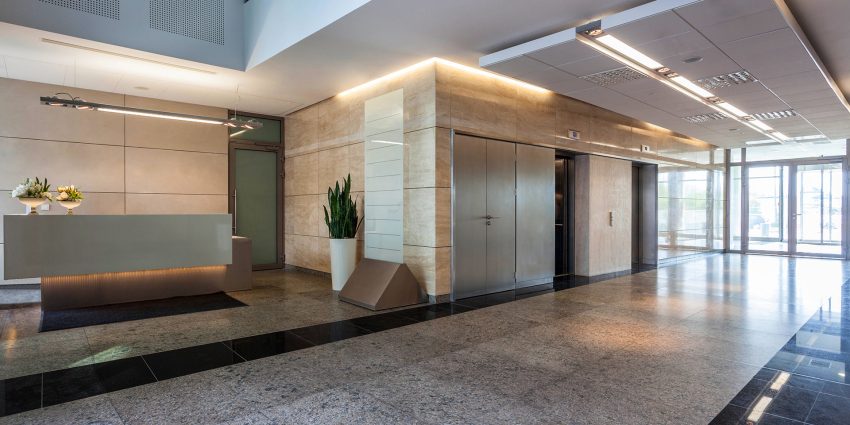
Some buildings are clean. You can tell at a glance. The floors reflect light. The entrance smells fresh. The surfaces you touch feel cared for. Then there are buildings that pass a quick inspection but leave visitors with a vague, unsettled feeling they can’t quite name. That feeling has a source. It’s usually several small things working together.
The Difference Between Clean and Cared For
Cleaning removes what’s visibly wrong. Caring for a space means attending to what’s subtly off as well. The gap between the two shows up in ways that don’t always register consciously but accumulate into an overall impression.
A floor can be swept and mopped and still look worn if the finish hasn’t been restored. A restroom can be wiped down and restocked, but still feel tired if the grout is discolored and the fixtures are dull. The cleaning happened. The care didn’t. This distinction is what separates facilities that feel alive from those that feel like they’re being managed down.
What People Sense Without Knowing It
Visitors process a space through more than their eyes. Smell is the first and most immediate filter. A neutral, clean scent registers as professional. Anything stale, chemical, or faintly musty creates unease before a person has even looked around.
After that, texture. The feel of surfaces underfoot, the smoothness of a door handle, the give of flooring. These are sensory details that people rarely notice explicitly but miss when they’re off.
Then light. Dingy light fixtures, clouded lenses, and uneven illumination in hallways or common areas all contribute to a feeling of dimness that reads as neglect even in a spotless space.
The Areas That Tend to Slip?
Neglect in commercial facilities rarely announces itself. It hides in the places that get cleaned quickly and not closely:
- Ceiling corners and vents accumulating visible dust
- Baseboards and wall edges with scuff marks and buildup
- Light switch surrounds and door frames that never get wiped
- Elevator interiors where walls and tracks collect residue
- Entry mats that have gone past the point of serving any purpose
These are the spots that a hurried routine skips. They also happen to be the spots a discerning visitor’s eye naturally travels.
When Maintenance Falls Behind Cleaning
A building that gets cleaned on schedule but doesn’t receive consistent maintenance will gradually start to look its age in ways that cleaning can’t reverse. Paint chips, grout darkens, caulk separates, and metal fixtures oxidize. None of it is dramatic. All of it is cumulative.
At some point, no amount of mopping or polishing compensates for surfaces that need restoration rather than routine care. This is when buildings begin to feel neglected, even when the cleaning logs are full.
How to Close the Gap
The fix isn’t necessarily more cleaning. It’s more complete attention. A walkthrough conducted the way a first-time visitor would experience the space, not the way a crew moves through it on a familiar route, reveals a different set of issues.
Ask what a client would notice in the first thirty seconds. Look at what’s at eye level. Notice the smell at the entrance. Check the corners. Run a finger along a baseboard. Most neglect lives in the details. So does most of the impression your building makes.