
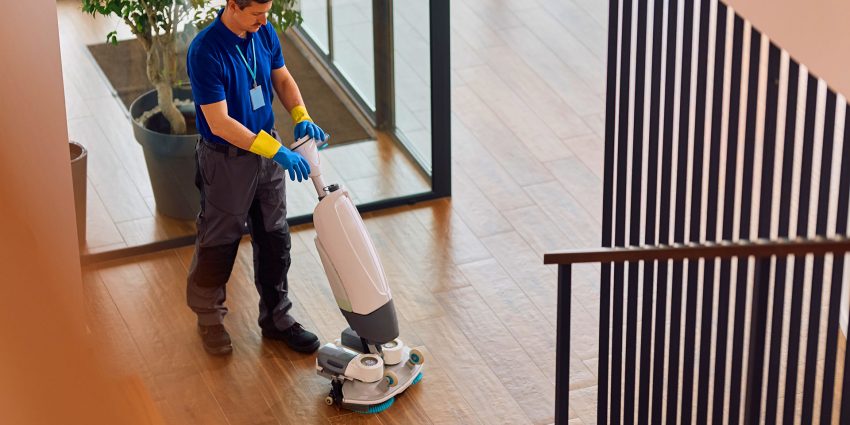
Walk into an office building that’s spotless, and something shifts. You feel more focused, more professional, more confident. Now walk into one that’s dingy, dusty, and neglected, and watch that feeling evaporate instantly. Office building cleaning isn’t a background task, it’s a front-line business decision that shapes perception, productivity, and even employee health every single day.
What Is Office Building Cleaning?
Office building cleaning is the systematic maintenance of commercial workspaces, including daily janitorial tasks, deep cleaning services, restroom sanitation, floor care, and surface disinfection. It covers both interior and common areas to ensure a safe, hygienic, and professional environment for employees, clients, and visitors.
Why Office Building Cleaning Is More Than Just Mopping Floors
Most building managers think about cleaning only when something looks visibly dirty. That’s a reactive strategy, and it costs more in the long run. A proactive cleaning program protects your assets, your people, and your reputation.
Studies consistently show that cleaner work environments reduce employee sick days, boost morale, and improve cognitive performance. Dust, mold, and bacteria don’t wait for a scheduled deep clean. They accumulate quietly, and the damage compounds over time.
Beyond health, there’s a financial argument. Neglected floors wear faster. Grimy HVAC systems work harder. Stained carpets get replaced sooner. A structured cleaning plan is genuinely an investment with measurable returns.
🏢 First Impressions
A client’s opinion of your business is formed within seconds of entering. Cleanliness communicates professionalism before a single word is spoken.
💼 Employee Retention
People want to work in clean, organized environments. A well-maintained office signals to your team that their comfort and wellbeing actually matter.
🧪 Health and Safety
Proper sanitization reduces pathogen spread and helps buildings remain compliant with health codes and commercial regulations.
The Core Components of a Professional Office Building Cleaning Program
A truly effective cleaning program isn’t just a checklist. It’s a layered system that addresses daily needs, weekly maintenance, and periodic deep cleaning cycles. Here’s how the best facilities structure it.
Daily Janitorial Services
These are the tasks that keep a building functional and presentable on a day-to-day basis. They’re non-negotiable and typically performed during off-hours to minimize disruption.
- Emptying trash and recycling bins throughout the building
- Vacuuming high-traffic areas, corridors, and lobbies
- Wiping down common surface areas, desks, and reception counters
- Restroom cleaning, restocking supplies, and disinfecting fixtures
- Cleaning kitchen and break room surfaces, including sinks and counters
- Spot-cleaning glass doors, mirrors, and partition walls
- Mopping hard floors in entry areas and restrooms
Weekly and Bi-Weekly Maintenance Cleaning
Beyond daily routines, certain tasks need scheduled attention to prevent build-up and keep the building looking its best throughout the month.
- Full vacuuming of all carpeted areas, including offices and conference rooms
- Dusting baseboards, window ledges, and ceiling vents
- Deep-cleaning restrooms including tile grout and toilet bases
- Sanitizing high-touch surfaces such as door handles, elevator buttons, and railings
- Cleaning interior glass partitions and windows
Periodic Deep Cleaning Services
These are the heavy-duty services that many building managers overlook, often until a problem becomes obvious. Scheduling them quarterly or semi-annually prevents serious deterioration.
- Carpet extraction and steam cleaning to remove embedded dirt and allergens
- Hard floor stripping, waxing, and buffing to restore finish and protect surfaces
- High-dusting of light fixtures, ceiling fans, and elevated surfaces
- HVAC vent cleaning to improve air quality and system efficiency
- Upholstery cleaning for lobby furniture and conference room seating
- Pressure washing of building entrances and walkways
How Office Building Cleaning Impacts Indoor Air Quality
This is one of the most underestimated aspects of commercial cleaning. Indoor air can be two to five times more polluted than outdoor air, according to the EPA. In an office building, that statistic carries real weight.
Dust mites, mold spores, pollen, and volatile organic compounds (VOCs) from cleaning products themselves can all degrade air quality. Choosing the right cleaning methods and products matters enormously.
Good janitorial programs also include proper microfiber cloth protocols, HEPA-filter vacuums, and scheduled HVAC vent maintenance, all of which work together to keep the air your employees breathe genuinely clean.
Green Cleaning in Office Buildings: A Smarter Standard
Sustainability is no longer a trend in commercial cleaning. It’s a baseline expectation for modern office environments. Green cleaning programs use biodegradable products, reduced water consumption techniques, and waste-minimizing processes.
The benefits go beyond environmental responsibility. Green cleaning also means fewer chemical sensitivities among employees, safer conditions for cleaning staff, and often a better overall result because the products are formulated to clean efficiently without harsh residue.
Look for cleaning providers certified under programs like Green Seal or LEED-compliant cleaning standards when evaluating your options.
Exterior Cleanliness Is Part of the Same Standard
Building cleanliness doesn’t begin at the front door. It begins at the curb. How your building’s exterior looks, the entrance, the sidewalk, the facade, communicates your standards before a visitor even reaches the lobby. Understanding how exterior care shapes your brand perception is essential context for any complete commercial cleaning strategy. Interior and exterior programs work as a unified system, and neglecting one undermines the other.
In-House Cleaning vs. Outsourcing to a Commercial Cleaning Company
This is a debate many facility managers wrestle with, and the answer isn’t always obvious. Here’s a clear-eyed comparison to help you decide.
In-House Cleaning Team
- Greater day-to-day control
- Staff familiar with your facility
- Immediate availability for spills and emergencies
- Higher overhead: wages, benefits, supplies, equipment
- Training and supervision fall on management
- High turnover common in janitorial roles
Professional Cleaning Contractor
- Specialized equipment and trained staff
- Flexible contracts scaled to your needs
- No HR headaches or payroll responsibilities
- Access to green-certified and specialty services
- Consistent quality through accountability systems
- Requires vetting to find a reliable provider
For most mid-size to large office buildings, outsourcing to a vetted commercial cleaning company delivers better results at lower total cost. The key is knowing what to look for before signing a contract.
How to Evaluate and Choose an Office Building Cleaning Service
Not all commercial cleaning companies are equal. Here are the factors that separate top-tier providers from unreliable ones.
Licensing, Insurance, and Bonding
This is your first filter. A legitimate commercial cleaning company will carry general liability insurance, workers’ compensation coverage, and be fully bonded. Don’t accept verbal assurances; ask for certificates of insurance before any work begins.
Customizable Cleaning Plans
Avoid companies that offer only rigid, one-size packages. Your building has unique needs, and your cleaning plan should reflect that. A quality provider will conduct a walkthrough and build a scope of work around your facility specifically.
Quality Control Systems
Ask how they measure performance. Do they use digital checklists? Random audits? Client satisfaction surveys? A company with no formal quality control process is likely to be inconsistent over time.
Staff Screening and Training
Who is actually entering your building? Reputable companies conduct background checks, provide formal training on cleaning protocols and chemical safety, and have low staff turnover because they treat their employees well.
References and Reviews
Request references from clients with buildings similar in size and type to yours. And look beyond Google ratings. Check the Better Business Bureau, LinkedIn company pages, and industry platforms for a fuller picture.
Office Building Cleaning Frequency: How Often Is Enough?
This depends heavily on several factors: your building’s foot traffic, the number of occupants, whether food is consumed in the space, the nature of the work (medical, legal, tech, etc.), and local climate conditions.
Don’t let budget pressures push you toward insufficient frequency. The cumulative cost of deep-cleaning a building that’s been under-maintained almost always exceeds the cost of consistent, proactive service.
Specialty Cleaning Services That Office Buildings Often Overlook
Beyond the standard scope, there are several specialty cleaning services that make a significant difference in building longevity and occupant satisfaction.
- Electrostatic disinfection: Electrostatically charged disinfectant particles cling to all surfaces, including hard-to-reach areas, providing thorough pathogen control.
- Post-construction cleaning: After any renovation or build-out, construction debris and fine particulate dust require specialized removal before the space is safe to occupy.
- Day porter services: On-site staff during business hours who handle spills, replenish supplies, and maintain public areas in real time.
- Biohazard cleanup: Certified handling of bodily fluids, sharps, or other hazardous materials in compliance with OSHA regulations.
- Power washing of parking structures and garages: Removes oil stains, salt residue, and debris that build up rapidly in high-traffic vehicle areas.
Building a Cleaning Schedule That Works Long-Term
Sustainable cleanliness is the result of structured planning, not reactive scrambling. Here’s a simple framework for building a cleaning schedule that actually holds up over time.
- Audit your current state: Walk every area of the building and document what’s consistently clean, what’s consistently missed, and what’s deteriorating.
- Define your non-negotiables: Restrooms, entry areas, and kitchens need daily attention regardless of budget pressure. Identify these as anchors in your schedule.
- Layer in weekly and monthly tasks: Assign specific responsibilities to specific service days to create predictability and accountability.
- Schedule deep cleaning in advance: Book quarterly and semi-annual services at the start of the year so they don’t get pushed indefinitely.
- Build in an inspection process: Walk the building weekly against a standardized checklist, and share results with your cleaning provider.
Frequently Asked Questions About Office Building Cleaning
How often should an office building be professionally cleaned?
Most occupied office buildings require janitorial service at least three to five times per week. High-traffic buildings or those with food service areas typically need daily cleaning. Deep cleaning services